
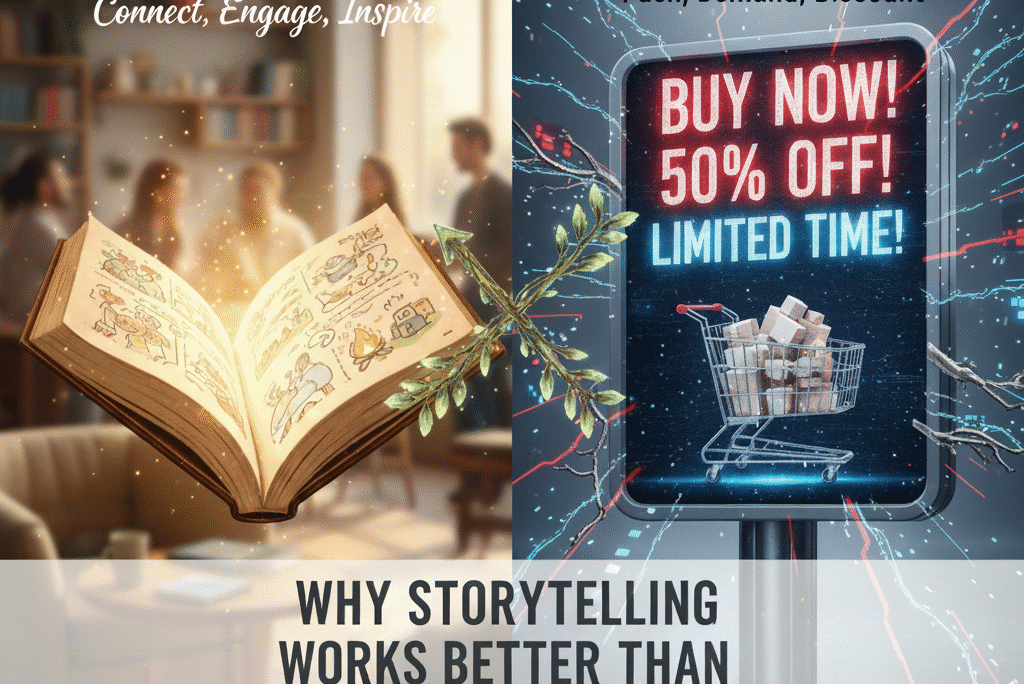
Why Storytelling Works Better Than Sales Posts Storytelling works better than Sales Posts Every Time. In today’s digital world, people are constantly bombarded with ads, promotions, and sales messages. From social media feeds to email inboxes, every brand seems to be saying the same thing: “Buy now,” “Limited offer,” “Best price.” And that’s exactly why most sales posts fail! A traditional sales post may tell your audience what you do, but a well-crafted story shows them why it matters and how it can change their life. This emotional connection is what separates brands that thrive from those that fade into the background. The Science Behind Storytelling Humans are wired for stories. From childhood, we respond to narratives—they help us understand the world, remember lessons, and empathize with others. This isn’t just psychology; it’s marketing gold. When you tell a story: Captures Attention Instantly – A relatable story hooks readers before they scroll past. Builds Trust & Credibility – Sharing real experiences or lessons makes your brand human and reliable. Creates Emotional Connection– People remember stories, not features or statistics. Encourages meaningful action– Instead of pushing, stories pull your audience toward engagement and conversion. Compared to sales posts that list features and prices, storytelling creates connection. Facts may inform, but stories engage and inspire action. Why Stories Convert Better Than Sales Posts 1. People Buy Emotion Before Logic A sales post focuses on features, pricing, and offers. A story focuses on feelings, experiences, and transformation. When people read a story, they imagine themselves in it. Their brain releases dopamine, making the message more memorable and emotionally engaging. Once the emotional connection is made, logic follows. Sales post: “Buy our service. Affordable. Fast. Reliable.” Story-based message: “A small business owner was struggling to get leads. After fixing her website messaging, she started receiving enquiries within 7 days—and finally felt confident about her brand.” Which one feels more human? Which one builds trust? Emotion drives action. Stories deliver emotion. 2. Stories Build Trust, Not Pressure Traditional sales posts often feel pushy. They tell people what to do. Stories show people what’s possible. When you tell a real story—about your brand journey, a customer experience, or a problem you solved—you’re not forcing a sale. You’re inviting the reader to relate. This is especially important today, when consumers are more cautious and value authenticity over hype. Stories say: “We understand your problem” “We’ve been there” “You’re not alone” That’s how trust is built—and trust sells far better than discounts. 3. Storytelling Makes Your Brand Memorable Facts are forgotten. Stories are remembered. People may forget your price or offer, but they’ll remember how your brand made them feel. A compelling story helps your brand stand out in a crowded digital space where everyone is competing for attention. When your audience remembers your story, they remember you—not just your product. This is why strong brands don’t just sell products; they sell beliefs, values, and experiences. 4. Stories Answer the “Why” Behind the Buy A sales post talks about what you sell. A story explains why it matters. Storytelling helps people understand: Why your brand exists Why you do things differently Why they should care When people connect with your “why,” they don’t need convincing. They choose you naturally. That’s the difference between a one-time buyer and a loyal customer. 5. Stories Guide Without Hard Selling The best stories don’t end with “Buy Now.” They end with inspiration and clarity. A good story gently leads the reader to realize: “This brand understands me. I want to work with them.” That’s powerful marketing—because the decision feels self-driven, not forced. Benefits of Storytelling for SEO and Engagement From an SEO perspective, storytelling keeps users on your website longer. When visitors spend more time reading your content, it signals value to search engines. Increases Time on Page: People spend more time reading or watching stories than skimming sales content. Reduces Bounce Rate: When users connect with your message, they stay, explore, and interact instead of leaving immediately. Boosts Organic Reach Through Shares: Emotion-driven stories are more likely to be shared on social media, increasing visibility without paid promotion. Supports Natural SEO Keyword Placement: Story-based content allows keywords to flow organically, improving search rankings while maintaining a human tone. Builds Trust and Brand Credibility: Consistent storytelling establishes authenticity, helping your brand feel relatable and reliable. Improves Conversion Rates: Stories connect emotionally and logically, making it easier for visitors to understand your value and take the next step. Aligns With Search Engine Priorities: Search engines favor content that genuinely helps and engages users—making storytelling a strategic SEO advantage. Search engines reward content that helps and engages people, not content that only sells. So, storytelling doesn’t just work emotionally—it works strategically too. How to Incorporate Storytelling into Your Website and Marketing Start With Your Audience Identify your audience’s pain points, needs, and aspirations. Your story should feel relevant and relatable to their journey. Show the Transformation People want results. Share before-and-after scenarios, challenges overcome, and measurable outcomes. Be Authentic Stay honest and real. Genuine stories build trust and create deeper emotional connections. Use Multiple Formats Stories don’t have to live only in text. Share them through videos, case studies, visuals, and social media formats to reach a wider audience. Include a Clear Call-to-Action A story without direction is incomplete. End your story by guiding your audience on the next step, whether it’s subscribing, booking a call, or learning more. Conclusion “People may forget what you said, but they will never forget how you made them feel.” Storytelling is the bridge between your brand and your audience’s heart. It replaces noise with meaning and promotion with connection. When people feel seen, understood, and inspired, they don’t need convincing—they move on their own. Your story is your most powerful marketing tool — If you tell it Well, your audience will not just listen, they will act. Hence, stop selling. Start storytelling. In modern digital marketing, the strongest brands aren’t louder—they’re more meaningful, using brand storytelling